Best Chainsaw Sharpeners
Best Chainsaw Sharpeners are the secret to quick, precise chainsaw maintenance that saves you time and prevents dangerous mishaps. If you’re tired of struggling with dull chainsaw chains and costly repairs, our expert guide offers powerful, reliable solutions to restore your tool’s peak performance. You’ll learn which sharpeners deliver both safety and efficiency, boosting your confidence on every job. Now, let’s uncover the top choices that can transform your chainsaw care routine.
Top 5 Chainsaw Sharpeners:
1. Oregon 410 Sharpener – Best Chainsaw Sharpener Overall

Looking to upgrade your sharpening game? The Oregon 410 Chainsaw Sharpener is a solid pick for both serious DIYers and professionals who want consistent, clean results.
Built with a tough steel frame, this sharpener is made to last. Whether you sharpen chains occasionally or constantly, it holds up well to repeated use. You’ll also find built-in safety features that let you work with confidence.
You can mount it on a wall or bench, so it easily fits into just about any workshop setup. Setup is straightforward, even if it’s your first time using a sharpener. Once installed, the intuitive design makes every sharpening session more efficient.
The included 5-3/4” grinding wheels are a standout feature, giving you the flexibility to work with different chain types without needing extras. A built-in template and angle gauge help you hit the perfect edge every time with minimal guesswork.
A bright LED light above the work area adds visibility, especially in dim or cluttered workspaces. Chain clamping feels secure, thanks to the solid construction and smooth mechanics.
It’s a bit on the heavy side, but that actually helps—it stays planted while you work, so there’s no slipping or sliding around.
If you’re serious about keeping your chains razor-sharp, the Oregon 410 offers the precision and durability to get the job done right.
2. Tecomec Super Jolly Bench Mounted Chain Grinder 11509006 – Best Professional Chainsaw Sharpener

Ready to elevate your sharpening game? The Tecomec Super Jolly Bench Mounted Chain Grinder earns its spot as the top-tier choice for professionals and serious DIYers alike.
Built for precision and flexibility, this machine allows you to fine-tune just about everything—from miter and down angles to tilt, top plate angle, and depth stop. Whether you’re restoring a dull chain or fine-tuning for aggressive cuts, the adjustments are smooth and easy to dial in.
Setup is simple, and it adapts well to any workspace with the option to mount it on a bench or a wall. A built-in work light ensures visibility, even in dimly lit garages or sheds. One of the standout features is the hydraulic clamp, which holds chains firmly in place so you can focus on sharpening with confidence.
The overall build quality feels rock-solid—made to handle demanding jobs without wearing down. You’ll immediately notice how sturdy and dependable it feels in your hands.
While the machine does produce some noise during use, it’s not excessive and doesn’t take away from the experience. What really matters is the consistent performance it delivers time and time again.
For those who sharpen chains frequently and value control, precision, and durability, this tool is a worthy upgrade.
3. Granberg International Bar-Mounted File Guide System – Best Bar-Mounted Chainsaw Sharpener
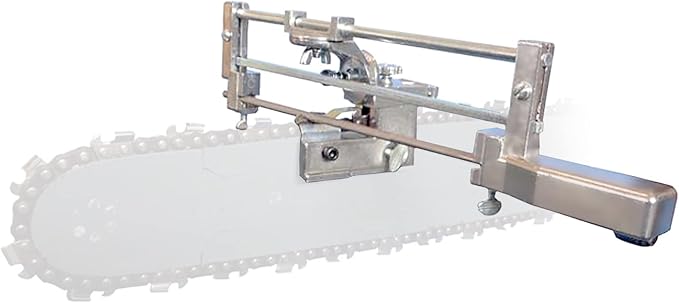
Sharpen your chainsaw like a pro with the Granberg International Bar-Mounted File Guide System. Unlike typical manual sharpeners, this tool ensures consistent, precise filing by guiding the file in the exact same position with every stroke. The result? Sharper teeth, longer chain life, and less effort during your next cut.
What makes it even more impressive is the build quality. Crafted from cast aluminum and zinc-plated steel, it’s rugged enough to handle any weather conditions you might face outdoors. It’s compatible with all round file sizes and easily adjusts to suit various cutter angles—making it a versatile fit for different chainsaw types.
A bonus feature is its ability to lower depth gauges using a flat file, adding to its all-around utility. Yes, the setup is a bit more involved than freehand sharpening, with separate settings for left and right cutters and depth gauges—but the payoff in accuracy is noticeable, especially on tougher jobs.
While it might feel a little bulky for smaller saws, that added precision makes it a top pick for anyone using high-performance or pro-grade chainsaws.
For anyone serious about chainsaw maintenance, this sharpener delivers a reliable edge every time.
4. Stihl Easy File 2-in-1 Sharpener – Best Manual Chainsaw Sharpener

Looking for a reliable manual chainsaw sharpener? The Stihl Easy File 2-in-1 Sharpener is a standout choice. Its power-free design means you can maintain your chain anywhere—no outlets, no hassle.
One of its best features is the ability to sharpen directly on the chain bar. There’s no need to remove the chain, saving you both time and effort. It’s an ideal solution for on-the-go maintenance, whether you’re deep in the woods or out at a job site.
The heavy-duty plastic holder gives you a steady, confident grip, while maintaining the perfect ratio between cutter depth and gauge height—a critical detail many other models overlook. It keeps your chain balanced and cutting efficiently.
Although the included instructions are minimal, they provide clear visual guidance. With just a bit of practice, you’ll get the hang of it quickly. A steady 90-degree hold and occasional repositioning with the chainsaw brake ensure both precision and safety.
What really sets this sharpener apart is its durability. It feels solid in hand—not like the flimsy options that wear out quickly.
Yes, there’s a small learning curve—but once you’re past it, the process becomes intuitive and satisfying. The Stihl Easy File 2-in-1 Sharpener offers a smart, rugged solution for anyone serious about chainsaw upkeep.
5. Chicago Electric 63803 – Best Budget Chainsaw Sharpener

Elevate your chainsaw game with the Chicago Electric 63803—a budget-friendly sharpener that delivers where it counts. After extensive use, it’s clear this tool punches above its weight in value and performance.
The first thing you’ll notice is how lightweight it is—just 6.5 pounds. That makes it easy to move around your shop or job site without hassle. Its compact design also saves precious workbench space, helping you keep your workspace neat and organized.
Setup is straightforward, even for beginners. Smooth knobs allow you to fine-tune the angle, depth, and pitch, giving you precision sharpening with minimal effort. A handy bicycle-style hand brake keeps the chain steady, ensuring safe and consistent results.
Included grinding wheels cover most popular chain sizes, adding to its all-around versatility. And with the built-in rotation knob, you can advance the chain with ease—speeding up the sharpening process without sacrificing accuracy.
Yes, the plastic housing may not feel as durable as metal alternatives, but it contributes to the tool’s portability and ease of use. What really stands out is how beginner-friendly and intuitive this sharpener is—it takes the intimidation out of the job.
For anyone looking to sharpen chainsaws without a major investment, the Chicago Electric 63803 is a smart and practical choice.
Things To Consider When Buying a Chainsaw Sharpener:
This guide will help you navigate the imperative aspects to consider when purchasing a chainsaw sharpener. Understanding your needs, including the type of chainsaw you own and the frequency of use, will impact your decision. You’ll also want to evaluate the sharpener’s speed, portability, and ease of use to ensure it fits your lifestyle. By keeping these factors in mind, you’ll be better equipped to choose a sharpener that enhances your chainsaw’s performance and extends its lifespan.
Types of Chainsaw Sharpeners
A variety of chainsaw sharpeners exists to cater to different needs and preferences. You might find the following options suitable:
- Manual Sharpeners
- Electric Sharpeners
- Bench-Mounted Sharpeners
- Portable Sharpeners
- Combination Sharpeners
Perceiving these types will help you decide which tool fits your sharpening style best.
Manual Sharpeners
Types of manual sharpeners range from simple round files to more intricate jigs. These sharpeners require some skill and patience, allowing you to control the sharpening angle and depth. If you enjoy being hands-on and appreciate the art of sharpening, a manual sharpener will suit your needs well.
Electric Sharpeners
Manual electric sharpeners are known for their efficiency and speed. They can sharpen chains quickly without requiring too much effort on your part, making them ideal if you frequently use your chainsaw. You can also find models that allow for adjustments in the sharpening angle for increased accuracy.
Another significant advantage of electric sharpeners is the reduced physical effort. You won’t have to exert strong pressure to achieve a sharp edge; instead, you simply guide the chain through the machine. This feature makes electric sharpeners a popular choice among users with limited physical strength or for those who need to sharpen multiple chains quickly.
Bench-Mounted Sharpeners
On the other hand, bench-mounted sharpeners remain stationary, providing stability and precision. These tools often come with built-in guides to ensure consistent results. They are perfect for those who have a dedicated workspace for sharpening, allowing you to achieve professional-grade sharpness while minimizing the risk of injury.
Sharpeners of this kind typically feature powerful motors and adjustable settings. This means you can customize the sharpening process to suit specific chain types and sizes, enhancing your overall sharpening experience. Investing in a bench-mounted sharpener can improve your chainsaw’s performance and longevity significantly.
Important Factors to Consider
It’s important to evaluate several important factors before purchasing a chainsaw sharpener to ensure you make the right choice. Consider the following:
- Type of sharpener (manual vs. electric)
- Sharpening speed and efficiency
- Durability of materials
- Price and warranty options
- User reviews and brand reputation
This will help you make an informed decision that meets your chainsaw maintenance needs.
Chain Size Compatibility
Clearly, one of the most significant aspects of a chainsaw sharpener is its compatibility with various chain sizes. Each chainsaw model may require specific sharpening settings, and using an incompatible sharpener could lead to ineffective sharpening or even damage your chain. Always check the manufacturer’s specifications to ensure a good match with your chainsaw.
Portability and Ease of Use
You want a chainsaw sharpener that you can easily transport and use without hassle. An ideal sharpener should be lightweight and compact, allowing you to bring it along on jobs without taking up too much space in your tool kit.
For instance, if you work in remote locations or have limited storage space, opting for a portable chainsaw sharpener can significantly enhance your efficiency. Features like foldable designs or built-in carrying handles can make sharpening on the go much simpler. Additionally, ensure that the sharpener has user-friendly controls, as ease of operation will save you time and frustration during your sharpening sessions.
Tips for Choosing the Right Sharpener
Unlike selecting a chainsaw, choosing the right sharpener involves considering various factors to ensure optimal performance. Focus on these key points:
- Type of sharpener (manual or electric)
- Compatibility with your chainsaw model
- Portability and ease of use
- Durability and construction quality
- Maintenance and replacement parts availability
Any decision made here will impact your efficiency and results while using your chainsaw.
Knowing Your Cutting Needs
There’s a significant difference in sharpeners based on whether you’re tackling light yard work or heavy-duty logging. Consider the frequency, type, and size of material you’ll be cutting. Your specific needs will help narrow down the options and ensure you select a sharpener that enhances your chainsaw’s performance effectively.
Budget Considerations
The price of chainsaw sharpeners can vary greatly, and it’s vital to find one that fits your financial plan while meeting your needs.
Understanding your budget means evaluating both the initial purchase price and the long-term expenses, such as replacement parts and maintenance. Cheaper options may save you money upfront, but investing a little more in quality can lead to better performance and durability, ultimately saving you costs over time. Determine how often you’ll use the sharpener and choose accordingly to maximize value.
Step-by-Step Guide to Using a Chainsaw Sharpener
After acquiring your chainsaw sharpener, it’s important to follow a methodical approach for optimal results. The following table breaks down the steps for effective sharpening:
Preparing the Chainsaw
One of the first steps in using a chainsaw sharpener is ensuring your chainsaw is in good condition. Start by cleaning the chain to remove any debris or sap. Checking the tension will also help, as it should be snug but not too tight. Ensuring these basics are in order will set you up for a successful sharpening experience.
Sharpening Process
If you’ve prepared your chainsaw effectively, you can now proceed with the sharpening process. Adjust the sharpener according to the specific angle recommended for your chain type. Firmly hold the chainsaw and evenly operate the sharpener, making sure each tooth receives equal attention.
Plus, maintaining an even pace while sharpening will prevent overheating, which can damage the chain. It’s beneficial to check the sharpness periodically during the process by running your finger along the blade. Adjust your technique as necessary and be sure to use proper safety gear throughout to ensure your personal safety.
Pros and Cons of Different Sharpeners
Your choice of chainsaw sharpener can significantly impact your cutting performance. Below is a breakdown of the pros and cons of various sharpener types.
| Pros | Cons |
|---|---|
| Quick sharpening times (Electric) | Higher initial cost (Electric) |
| Consistent results (Electric) | Requires power source (Electric) |
| Portable and lightweight (Manual) | Time-consuming (Manual) |
| More affordable (Manual) | May be less precise (Manual) |
| No power required (Manual) | Physical effort needed (Manual) |
Advantages and Disadvantages of Manual vs. Electric
The debate between manual and electric chainsaw sharpeners largely hinges on your personal preference and needs. While electric sharpeners offer speed and consistency, manual versions provide portability and cost-effectiveness. Choosing one over the other depends on how frequently you use your chainsaw and what kind of sharpening results you desire.
Longevity and Maintenance Considerations
Any tool you invest in requires regular maintenance to prolong its lifespan. Chainsaw sharpeners are no exception, and understanding their longevity can help you maximize your investment. With proper care—keeping blades clean, checking for wear, and storing them correctly—your sharpener can serve you well for years. Additionally, consider the availability of replacement parts, as some sharpeners may require less frequent replacements than others. A well-chosen sharpener could save you time and money in the long run.
Summing up
With this in mind, when selecting a chainsaw sharpener, you should evaluate several key factors including the sharpener’s type, ease of use, portability, and the size of chains it can accommodate. Additionally, consider your specific needs, such as frequency of use and skill level, to ensure the sharpener aligns with your requirements. Investing in a high-quality sharpener not only enhances your chainsaw’s performance but also prolongs its lifespan, ultimately improving your cutting efficiency.