Best Battery Chainsaws
Best battery chainsaws are transforming how homeowners tackle yard work. If you’re tired of struggling with heavy, gas-guzzling models, you’re in the right spot. These cordless chainsaws offer freedom and power without the hassle of cords or fumes. You’ll feel the thrill of a cleaner, quieter, and more efficient cutting experience. Ready to discover the top portable chainsaws that make life easier? Let’s dive in and explore your next game-changing tool.
Top 5 Battery Chainsaws:
1. Echo DCS-2500T

Powerful and compact, the Echo DCS-2500T stands out as a top-performing battery-powered chainsaw, combining strength and maneuverability in one efficient package.
With over 50 volts of cutting power and a 12-inch bar, this saw slices through logs with ease. At just over 7 pounds, its lightweight design makes it ideal for extended use, especially when trimming branches or clearing trails in tight spaces.
The top-handle configuration allows for one-handed operation, making it particularly useful for work above shoulder height. It delivers impressive cutting speed and can produce multiple clean cuts from a single charge—great for quick, efficient progress on demanding tasks.
A thoughtful addition is the safety-focused on/off button, which prevents accidental startups and helps preserve battery life—something not always found in electric models. It also retains the familiar features of gas-powered saws, making the transition smooth for experienced users.
While top-handle saws are generally better suited to seasoned operators, this model proves its worth with excellent control and power. Its compact frame is ideal for aerial tasks, though it may be less practical for prolonged ground-level cutting.
Overall, the Echo DCS-2500T shines with a smart balance of portability, performance, and safety. It’s a reliable tool for pros and outdoor enthusiasts looking to lighten their load without sacrificing capability.
2. Sun Joe iON100V-18CS-CT
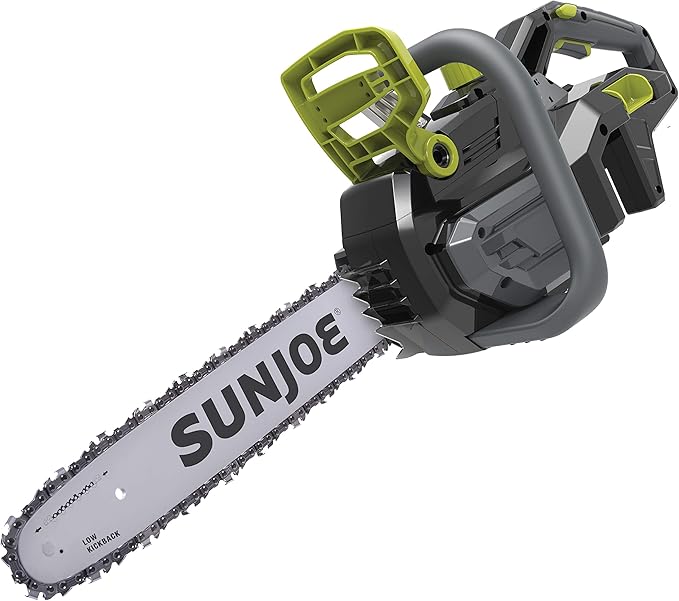
The Sun Joe iON100V-18CS-CT delivers serious cutting power in a cordless package, making it a strong choice for demanding outdoor tasks.
With 100 volts of battery power and an 18-inch bar, this chainsaw is built to handle larger jobs—from heavy yard work to cutting firewood—with confidence and control. It’s designed to slice through thick wood efficiently while keeping operation smooth and manageable.
One of its standout features is the tool-less chain tensioning system. Adjustments are quick and hassle-free, keeping the chain at optimal tension for safe and effective cuts. The automatic oiling system ensures continuous lubrication, reducing maintenance and promoting long-term performance.
Safety is clearly a priority. A protective hand brake and integrated safety switch help prevent accidental starts and give you extra peace of mind during use. Combined with a comfortable, ergonomic design, it offers a good balance of power and user control.
While the weight may feel a bit heavy during longer sessions, it remains manageable for most tasks—especially when used in intervals. For heavy-duty projects, its cutting power more than makes up for the added weight.
After thorough testing, the iON100V-18CS-CT proves itself as a dependable tool for anyone serious about outdoor work. It blends high performance with thoughtful safety features, standing out as a reliable battery-powered alternative to gas models.
3. DeWalt Cordless

The DeWalt 12-inch Cordless Chainsaw is a reliable option for homeowners and weekend DIYers looking for solid performance in a compact package.
Ideal for trimming, pruning, and light-duty cutting, this chainsaw integrates seamlessly into any DeWalt tool setup. If you already own a 20V 5Ah battery, you’re ready to go—making it easy to swap between tools without juggling multiple battery systems. That compatibility adds a layer of convenience that’s hard to overlook.
In testing, it tackled a 14-inch oak limb with surprising efficiency. While it may take a bit more finesse on larger branches, it proves capable with a little patience and technique. Battery life holds up well, leaving you with plenty of charge even after a substantial task.
It’s slightly heavier than some of its competitors, which may matter for extended overhead use or long sessions. However, if you’re handling routine yard work rather than climbing or clearing storm-damaged trees, the extra weight translates into a more durable feel.
What stands out most is its consistent, no-fuss performance. It’s a practical, straightforward chainsaw that delivers exactly what most homeowners need—without overcomplicating the job.
If you’re after a dependable tool that fits into your existing setup and handles backyard jobs with ease, the DeWalt 12-inch Cordless is well worth considering.
4. Greenworks G-MAX 40V 20312

The Greenworks G-MAX 40V 20312 is a solid choice for homeowners looking for a lightweight, user-friendly chainsaw that handles everyday outdoor tasks with ease.
Weighing just 10.4 pounds, this model makes tree trimming and light cutting jobs feel effortless. Its brushless motor reduces vibrations noticeably, helping you work longer without discomfort. It also runs cooler and requires far less maintenance than gas-powered models—an added bonus for those who prefer hassle-free tools.
Powered by a 40V lithium-ion battery, you can expect up to 70 minutes of runtime on a single charge, which is more than enough for most yard projects. The battery is also compatible with over a dozen other Greenworks tools, giving you added flexibility across your outdoor gear.
While it doesn’t include some of the advanced features found on higher-end models, it excels at basic trimming and cutting tasks. It’s especially ideal for beginners, thanks to its intuitive design and consistent performance.
What really stands out is how seamlessly it fits into your routine. Easy to use, dependable, and low-maintenance, the G-MAX 20312 is a great tool to have on hand for regular yard upkeep and quick cleanups.
5. WEMARS (4.0AH) Lithium-ion 20V Battery Powered Chainsaw

Looking for a battery chainsaw that delivers both power and convenience? The WEMARS 20V Battery Powered Chainsaw with a 4.0Ah lithium-ion battery offers strong performance and dependable runtime for a variety of cutting tasks.
One of its standout features is the high-capacity 4.0Ah battery, which provides extended operation without frequent recharging. Whether you’re trimming branches, cutting firewood, or tackling yard cleanup, it delivers consistent cutting power across different wood types.
The 20V system offers solid performance, producing smooth, clean cuts that make your projects faster and more efficient. With sturdy construction and well-designed chains, the saw is built to handle regular use while maintaining durability over time.
Tool-less chain tensioning makes quick adjustments easy, so you can stay focused on the job instead of reaching for extra tools. Combined with an ergonomic handle and balanced weight distribution, it’s designed to reduce fatigue and improve comfort during longer tasks.
While the saw leans slightly heavier than some compact models, it compensates with reliable performance and cutting strength—especially useful for users tackling more demanding jobs.
What stands out most is how well the WEMARS chainsaw blends power, usability, and long battery life. It’s a practical, go-to option for anyone wanting cordless freedom without sacrificing cutting capability.
Things To Consider When Buying a Battery Chainsaw:
Chainsaws can dramatically streamline your outdoor projects, making them imperative tools for both homeowners and professionals alike. As you venture into the world of battery chainsaws, it’s important to weigh several factors to ensure you choose the right one for your needs. From power and battery life to weight and features, understanding these elements will help you make an informed decision that aligns with your cutting tasks. Let’s look into the key considerations you should take into account before making your purchase.
Types of Battery Chainsaws
To find the best battery chainsaw for your needs, it’s vital to understand the different types available. Here’s a breakdown of the most common types:
Standard Chainsaws
To tackle larger jobs efficiently, standard battery chainsaws provide robust power and cutting capacity, making them suitable for heavy-duty tasks, such as felling trees or cutting large logs.
Compact Chainsaws
You might consider compact chainsaws for light duties like trimming branches or clearing small bushes. These tools are often more manageable and easier to store.
With their lightweight design and user-friendly features, compact chainsaws typically allow for quick maneuverability, making them perfect for beginners or anyone looking to handle smaller projects without the bulk of a standard chainsaw.
Specialty Chainsaws
One option you might explore is specialty chainsaws, which cater to unique tasks such as carving or pruning. They are tailored to specific cutting needs.
Chainsaws in this category are designed with unique features, such as longer bars for carving detailed cuts or smaller sizes for precision work, allowing you to accomplish specific tasks with greater ease and artistry.
Important Factors to Consider
Some key elements can greatly influence your satisfaction with a battery chainsaw purchase. Consider the following:
- Battery life and power
- Bar length and weight
- Cutting performance
- Ergonomics and comfort
- Brand reputation and warranty
After evaluating these factors, you’ll be better equipped to choose the right chainsaw for your needs.
Battery Life and Power
Important aspects of battery life and power directly determine how effectively your chainsaw performs. Look for models with lithium-ion batteries, which tend to provide longer runtimes and faster charging capabilities. The power output will also influence cutting efficiency, so choose a chainsaw that matches the workload you plan to tackle.
Bar Length and Weight
Assuming you plan to handle various tasks, the bar length and weight of your chainsaw are imperative for ease of use. A longer bar allows for broader cuts but can be heavier and more challenging to maneuver. Conversely, a lighter model with a shorter bar is easier for prolonged use, especially in tight spaces.
Understanding the bar length and weight helps you select a chainsaw tailored to your physical capabilities and the specific jobs you intend to undertake. If you frequently engage in detailed work like pruning, opt for a shorter, lighter option. For larger projects like felling trees, a longer bar may be more suitable despite the added weight. Balancing these attributes can enhance your cutting experience and reduce fatigue.
Pros and Cons of Battery Chainsaws
For those considering a battery chainsaw, it’s vital to weigh its advantages and disadvantages. The pros include portability and minimal maintenance, while cons may involve limited runtime and power compared to gas models. Here’s a quick comparison to help you decide:
| Pros | Cons |
|---|---|
| Lightweight and portable | Limited battery life |
| Low noise operation | Less power for heavy-duty tasks |
| No emissions | Charging time |
| Minimal maintenance | Potentially higher initial cost |
| Easy to start | Battery replacement needed over time |
Advantages
There’s a lot to like about battery chainsaws, particularly their ease of use. You’ll find that they are lightweight, making them perfect for casual users or those who want to avoid the hassle of gas chainsaws. Their quiet operation and zero emissions also mean you can work in residential areas without disturbing your neighbors or harming the environment.
Disadvantages
Some downsides exist with battery chainsaws that you should carefully consider. The primary concern is their limited runtime, which can affect larger projects.
Cons include the fact that battery chainsaws may not deliver the same power as gas models, which can be a drawback for tougher tasks. Charging times can also lead to downtime during your project, and you may find yourself needing additional batteries for extended use. Additionally, the upfront cost is typically higher compared to gas counterparts, and battery life can degrade over time, necessitating replacement. All of these factors are worth weighing as you make your choice.
Tips for Choosing the Right Battery Chainsaw
After determining your specific needs, consider a few important factors when selecting a battery chainsaw:
- Battery life and charging time
- Bar length for different cutting tasks
- Weight and portability
- Safety features
- Price and warranty options
Recognizing these factors will ensure you make an informed decision that aligns with your projects.
Assessing Your Needs
If you are planning to tackle various tasks with your chainsaw, it’s important to assess the types of jobs you’ll be doing. Think about whether you’ll use it for light pruning, heavy cutting, or occasional yard cleanup. Your needs will guide you in choosing the right features such as power and bar length.
Researching Brands and Models
Assessing brand reputation and specific models is key to finding a reliable battery chainsaw. Look for consumer reviews and ratings to gauge real-world performance.
For instance, certain brands specialize in lightweight models while others offer more powerful options for demanding jobs. Exploring these distinctions will help you identify the best fit for your needs and ensure you’re investing in a quality product.
Step-by-Step Buying Guide
Unlike gas chainsaws, battery chainsaws offer convenience and ease of use. When you’re considering a purchase, it’s important to evaluate various factors to find the right model that meets your needs. The following guide breaks down important aspects to help you make an informed decision.
Setting a Budget
Assuming you’ve identified your specific needs, the next step is to set a budget for your battery chainsaw. Prices typically range from affordable models for light tasks to higher-end options for heavy-duty use. Consider not only the initial purchase price but also the costs of additional batteries and accessories that might be necessary for maintaining performance.
Comparing Features
Some features significantly affect your chainsaw experience and overall satisfaction. Assess different brands and models based on key specifications. Below are some features to keep in mind during your comparison.
Step-by-step comparisons allow you to understand what features are most relevant to your needs. Evaluating specs such as motor type can help ensure that your chainsaw is powerful enough for the jobs you have in mind, while tool-free adjustments increase convenience and decrease downtime. Make a side-by-side comparison of each model to pinpoint which combination of features aligns best with your requirements.
Maintenance and Care
Despite the convenience of a battery chainsaw, proper maintenance and care are necessary to ensure its longevity and performance. Regular inspection and cleaning can prevent issues and keep your chainsaw running smoothly. Familiarize yourself with the manufacturer’s guidelines, and be diligent about checking components such as the chain tension and bar condition to prevent damage during use.
Keeping the Battery Healthy
If you want to maximize the lifespan of your battery, make sure to charge it fully before its first use and refrain from letting it drain completely frequently. Utilize smart charging practices, like unplugging once fully charged, and store the battery in a cool, dry place to maintain its health over time.
General Chainsaw Maintenance
Care for your battery chainsaw by conducting routine checks and performing necessary maintenance to keep it in top shape. Regularly inspect the chain for damage, ensure the bar is well-lubricated, and clean debris from the air filter and other components to maintain optimal performance.
Maintenance involves checking the chain tension to ensure it is neither too loose nor too tight, which can affect cutting efficiency and safety. Additionally, regularly sharpening the chain will enhance performance and effectiveness during use. Don’t forget about cleaning the bar and chain after every use to prevent the buildup of resin and other materials, which can cause wear and hinder functionality over time. Following these steps will help you keep your chainsaw operating at its best.
Summing up
Ultimately, when buying a battery chainsaw, you should evaluate factors such as battery capacity, weight, cutting speed, and additional features to ensure it meets your specific needs. Consider the type of work you plan to undertake, the runtime you require, and the ease of maintenance. Choosing a reputable brand can also enhance your experience through better support and reliability. By taking these aspects into account, you can find a battery chainsaw that provides efficiency and performance for your cutting tasks.