Best Tillers
Looking for the best tillers to conquer tough soil and boost your garden’s growth? You’re not alone. Many gardeners face the frustration of uneven, compacted earth, wasting energy and time. Our expert guide dives into top-rated garden tillers and rototillers that promise to transform labor into effortless, productive work. Discover powerful, reliable tools that spark excitement in every dig—read on to uncover the solution your garden truly deserves.
Top 5 Tillers:
1. Mantis 7940 4-Cycle Gas Powered Tiller – Best Tiller Overall

Looking to revamp your garden soil with minimal effort? The Mantis 7940 4-Cycle Gas Powered Tiller could be exactly what you need. Powered by a reliable Honda engine, this compact cultivator delivers solid performance in a lightweight frame.
At just 24 pounds, it’s easy to carry around the yard. A built-in handle makes transport convenient, and the foldable handlebars help with storage—especially in sheds or garages where space is limited.
Since it runs on gas, there’s no need to mix fuel and oil, which simplifies operation. The finger-controlled throttle offers precise speed management, making it easy to handle whether you’re new to gardening or more experienced.
What sets this model apart are the curved tines. They can dig down as deep as 10 inches or be adjusted for lighter cultivation at just a couple of inches—perfect for everything from breaking new ground to prepping flower beds. Its narrow 9-inch width helps you maneuver easily in tight spots, like between rows or around raised beds.
Other thoughtful features include a sturdy kickstand for stability when parked and a straightforward refueling process that keeps downtime to a minimum. While there’s no electric option, the gas-powered design gives you total freedom to move without cords or outlets.
The Mantis 7940 strikes a strong balance between power and portability. Whether you’re starting a vegetable plot or maintaining established beds, it’s a reliable tool to make garden work faster and easier.
2. Honda Front-Tine Tiller – Best Tiller for Beginners

Get ready to break new ground with the Honda Front-Tine Tiller—an approachable and reliable option for gardeners of all skill levels. Setup is refreshingly simple: just add oil and gas, and it’s ready to work.
The 4-stroke GX engine fires up quickly, so you can get right into soil prep without hassle. Controls are intuitive, making it easy to operate even if you’re new to gardening. One standout feature is the patented hybrid tines, which both cultivate and till efficiently. They dig down to about 4 inches—ideal for preparing garden beds or refreshing compacted soil.
A heavy-duty drive gear enhances the machine’s durability, while a front engine guard helps protect against bumps during operation. The ergonomic handles feel comfortable even after longer sessions, though they aren’t adjustable—a small trade-off considering the overall ease of use.
Transporting the tiller is fairly simple thanks to detachable wheels. You’ll need to remove them before tilling, which might add a step but does make storage more manageable.
What really stood out was its ability to handle tougher soil types, especially clay. Whether you’re prepping new beds or maintaining established ones, this tiller delivers solid, consistent performance.
For a tool that balances simplicity with strength, the Honda Front-Tine Tiller earns its place in any serious garden setup.
3. Earthquake 37037 Pioneer Dual-Direction Rear Tine Tiller – Best Powerful Tiller

Gardening gets a whole lot easier with the Earthquake 37037 Pioneer Rear Tine Tiller. Whether you’re breaking new ground or prepping for a fresh season, this tiller handles both with confidence.
What sets it apart is its dual-direction tines. In CRT mode, it chews through tough sod and hardened soil, making it a strong choice for untamed plots. Switch to SRT mode, and it refines the soil into a smooth, ready-to-plant seedbed. The shifting system is refreshingly simple—just slide the handle into place, no guessing required.
Powered by a 99cc Viper engine, it strikes a nice balance between quiet operation and dependable force. It doesn’t feel overwhelming to handle, and the reverse function comes in handy for navigating tighter garden paths or corners.
Another standout is the set of airless wheels. No flats to deal with, and they provide great grip across uneven terrain. Combined with solid balance and weight distribution, this tiller feels surprisingly manageable, even for those new to rear-tine models.
The thing I liked most? Its usability. It’s powerful, but not intimidating—and that makes it a great option for anyone who wants reliable performance without overcomplication. While it’s priced a bit higher than entry-level models, the added features and overall build quality make it a strong contender for serious gardeners.
4. Greenworks Cordless Cultivator/Tiller – Best Electric Tiller
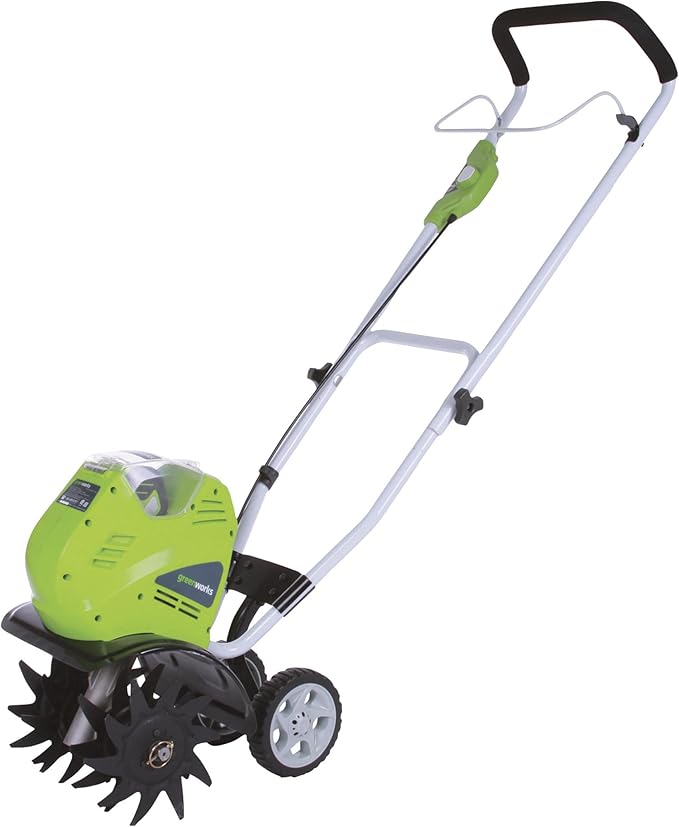
The Greenworks Cordless Cultivator/Tiller is proof that electric tools can pack a serious punch. Designed for smaller gardens and tight spaces, this lightweight machine makes tilling surprisingly easy—even enjoyable.
One of the first things that stands out is its power. With up to 2,000 strikes per minute, it cuts through compact soil and weeds faster than you’d expect. You’ll spend less time wrestling with the ground and more time actually gardening. The six-inch wheels make it easy to steer around raised beds and tight corners, and at just 21 pounds, it’s light enough to lift or move without a struggle.
Battery life is another win here. The 40V lithium battery lasts about 30 minutes on a full charge and recharges in under two hours. That’s more than enough for most backyard tasks. While some cordless models lose steam fast, this one keeps pace with your gardening rhythm.
Assembly is mostly straightforward, though I found the instructions a bit cramped and not as beginner-friendly as they could be. Attaching the double tines takes a bit of patience—but once you’ve got it, the performance speaks for itself.
What really makes this tiller stand out is how it balances power with ease of use. Whether you’re maintaining a flower bed or prepping a small veggie patch, it gets the job done without weighing you down. If you’re after a reliable, no-fuss electric tiller, the Greenworks Cordless model is definitely worth a look.
5. Sun Joe Electric Garden Tiller – Best Budget Tiller

If you’re just getting into gardening or want a no-fuss way to prep your soil, the Sun Joe Electric Garden Tiller is a solid choice. It stands out as one of the easiest tools to use—plug it in, push a button, and you’re off. No fuel mixing, no engine hassle, just straightforward operation.
Its compact, lightweight design makes it especially handy for small garden plots or raised beds. The foldable handles help with storage too, which is a bonus if you’re tight on space. During testing, we ran it through a couple of sizable gardens, and it performed better than expected—breaking up soil a few inches deep with minimal resistance.
The 12-amp motor gives it surprising power for an electric model. It handles surface-level tilling with confidence, loosening dirt quickly and evenly. Yes, you’ll need to manage the extension cord while working, but it’s a small trade-off for the convenience you get in return.
What really makes this tiller shine is how approachable it is. Whether you’re new to gardening or just want something that gets the job done without complications, this machine delivers. It’s proof that great garden tools don’t have to be complicated—or heavy.
Things To Consider When Buying a Tiller:
Tiller options abound, making it imperative for you to carefully evaluate your needs before making a purchase. Whether you’re looking to expand your garden or maintain your landscaping, choosing the right tiller can greatly impact your gardening success. In this guide, we’ll explore important factors you should consider, such as size, power, and ease of use, to ensure you select a tiller that best fits your gardening goals and preferences.
Types of Tillers
Your choice of tiller can greatly affect your gardening experience. Below is a breakdown of the main types of tillers you might consider:
Manual Tillers
Tillers that are manually operated are excellent for small gardens or flower beds. They allow you to have precise control over your tilling process and can easily navigate in tight spaces. With a manual tiller, you can cultivate the soil without the need for fuel or electricity, making it an environmentally friendly option.
Gas-Powered Tillers
One effective option available is gas-powered tillers, which are perfect for larger areas that require heavy-duty tilling. With their strong engines, these tillers can break compacted soil easily and can handle a variety of soil types.
Tillers in this category are often equipped with robust tines and can till deeper than other types, making them ideal for preparing large gardens or landscaping projects. They are a great investment if you frequently work on significant plots of land, but they do require regular maintenance and fuel to operate.
Electric Tillers
Some gardeners prefer electric tillers for their user-friendly operation and lower maintenance needs. These tillers are lightweight and provide enough power for small to medium-sized gardens. They are usually quieter than gas-powered options and do not emit fumes, making them a cleaner alternative.
Another advantage of electric tillers is their immediate start feature, allowing you to begin tilling without the hassle of warming up an engine. They can be a fantastic choice if you are working in a residential area or need an easier-to-handle tool for lighter gardening tasks.
Factors to Consider
Clearly, choosing the right tiller involves multiple considerations that can significantly impact your gardening experience. Evaluate the following factors before making your purchase:
- Size of the Garden
- Soil Type
- Budget
Any informed decision will enhance your gardening success.
Size of the Garden
You should assess the size of your garden to determine the appropriate tiller. A small garden may benefit from a lightweight, compact tiller, while larger areas may require a more robust and powerful machine to cover the ground efficiently.
Soil Type
For optimal performance, understanding your soil type is necessary. Different tillers are designed to handle various soil conditions, from sandy to clay-heavy soils.
Plus, knowing your soil’s texture helps you select a tiller that effectively breaks down compaction and enhances aeration, ensuring healthy plant growth. If your soil contains rocks or is particularly dense, consider a model with stronger tines and a more powerful engine to manage these challenges.
Budget
Garden budget is a significant factor when buying a tiller. You want to find a machine that balances quality and cost to ensure it meets your gardening needs without breaking the bank.
Budget considerations should include not just the initial purchase price but also maintenance costs, replacement parts, and fuel efficiency. Investing in a reliable tiller may save you money in the long run, minimizing the need for frequent repairs or replacements. Always weigh the features against your needs to make the best choice.
Tips for Choosing the Right Tiller
Once again, selecting the right tiller requires careful consideration of several factors. Here are some tips to guide you:
- Identify the size of the area you will be working on.
- Decide between electric or gas-powered options based on your needs.
- Consider the tilling depth and width suitable for your soil type.
- Evaluate the weight and maneuverability of the tiller.
Assume that these factors will help you make an informed choice that best fits your gardening ambitions.
Assessing Your Needs
Assuming you’re looking to landscape a small garden or cultivate a larger tract of land, it’s necessary to evaluate the specific tasks you intend to use the tiller for. Consider the soil type, existing vegetation, and the frequency of use to determine what features and power source will best serve your gardening endeavors.
Reading Reviews
Any time you decide on a purchase, especially for equipment like a tiller, it’s beneficial to read customer reviews. This will provide insights into the performance and reliability of various models.
For instance, examining reviews can reveal common issues that users face and highlight standout features that you might appreciate. Pay attention to the feedback regarding ease of use, maintenance requirements, and customer support experiences. These details can significantly enhance your understanding and lead you to make a well-informed decision before purchasing your tiller.
Step-by-Step Buying Guide
After you’ve decided to invest in a tiller, following a structured buying guide can simplify the process. This guide breaks down necessary steps to help you make an informed decision:
Researching Options
Even before you start comparing models, it’s important to research the different types of tillers available. Look into brands, read customer reviews, and examine specifications to understand which options align best with your gardening needs.
Comparing Features
To ensure you select the right tiller, it’s necessary to compare features. Evaluate aspects such as horsepower, weight, and ease of use among different models.
Plus, examining these features lets you determine which tiller best fits your gardening style and requirements. Think about your space and how often you’ll use the tiller, as these factors will help guide your choice.
Making the Purchase
Features like warranty, customer support, and product availability should be high on your list when making the purchase. It’s important to follow through with the right retailer or online platform to ensure a smooth transaction.
Making the purchase can be straightforward if you finalize your choice based on thorough comparisons and research. Ensure that the retailer offers solid warranty options and after-sales support, which can be helpful in case of any concerns down the line.
Pros and Cons of Different Tillers
Despite their effectiveness in soil preparation, tillers come with their own set of advantages and disadvantages. Evaluating these factors can help you decide which type best meets your gardening needs.
Pros and Cons of Tillers
| Pros | Cons |
|---|---|
| Efficient soil aeration | Can be noisy |
| Saves time and effort | May be heavy and hard to maneuver |
| Improves soil texture | Can damage soil structure if overused |
| Versatile for various tasks | Fuel or power costs |
| Available in different sizes | Requires maintenance |
| Enhances nutrient mixing | Learning curve for operation |
| Quickly breaks up hard soil | Expensive models can strain budget |
Advantages
Clearly, tillers provide substantial benefits, such as saving you time and effort while preparing your garden soil. They efficiently aerate the ground, enhance nutrient mixing, and can improve your soil’s overall texture, making it easier for plants to thrive. With various sizes available, a tiller can be a versatile tool for gardens of all sizes, enabling you to tackle different gardening tasks with ease.
Disadvantages
To consider potential drawbacks, keep in mind that tillers can be noisy and may require a learning curve for proper operation. Heavier models may be challenging to maneuver, especially for those with limited strength or mobility. Additionally, using a tiller irresponsibly can harm soil structure, leading to long-term detrimental effects on your garden’s health.
Understanding the potential disadvantages of tillers is necessary in making an informed decision. While they can significantly aid your gardening efforts, the noise, weight, and maintenance requirements might not suit everyone. You should also be aware that over-tilling can lead to soil compaction or degradation over time, which might hinder your plants’ growth. Therefore, weigh these considerations against your gardening needs to ensure you choose the right tool for your backyard projects.
Maintenance Tips for Your Tiller
All tillers require regular maintenance to ensure optimal performance and longevity. Here are some necessary tips to keep your tiller running smoothly:
- Check and change the oil regularly.
- Inspect the air filter and clean or replace it as needed.
- Sharpen the tines for effective tilling.
- Inspect belts and cables for wear and tear.
- Keep your tiller clean to prevent rust and damage.
After following these maintenance tips, your tiller will be better equipped to handle your gardening tasks efficiently.
Cleaning and Storage
One of the easiest ways to maintain your tiller is by ensuring it is clean and properly stored after each use. Remove dirt, debris, and plant material from the tines and the body. A quick rinse with water can help, but be sure to avoid soaking electrical components. Store your tiller in a dry and sheltered location to protect it from the elements.
Regular Checks
To maintain your tiller’s efficiency, perform regular checks of its components. Look for loose bolts, frayed wires, and any signs of wear on the tines. Check the fuel system for leaks and ensure all connections are secure to prevent accidents. Regular inspections can save you time and prevent costly repairs down the line.
Storage is equally important for your tiller’s upkeep. Ensure that you empty the fuel tank before storing it for long periods to prevent clogging. Remove the spark plug and store it in a safe place, while also adding fuel stabilizer to help maintain the fuel’s integrity. By taking these simple steps, you extend the life of your tiller and ensure it’s ready for your next gardening project.
Conclusion
Drawing together the various aspects of purchasing a tiller, you should evaluate your specific gardening needs, consider the tiller type, engine power, and features that will enhance your gardening experience. Assessing your available space, soil type, and budget will also guide your decision. By weighing these factors, you can choose a tiller that fits your requirements, ensuring that you have the right tool to cultivate and maintain your garden effectively.